Opportunity
We noticed a tension amateur producers experience:
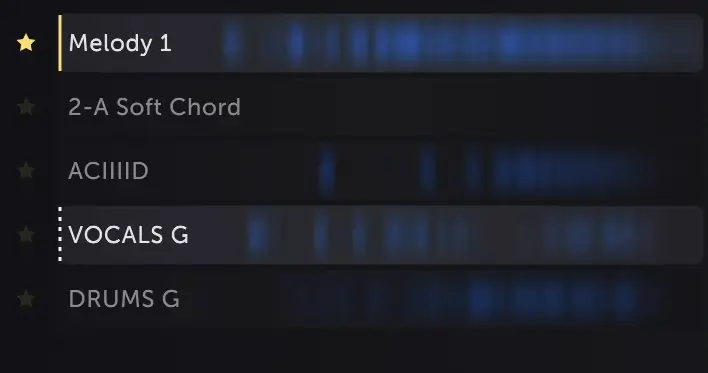
- They need to “mix” a little bit while they’re composing, or they struggle to know what’s working and what isn’t
- But they also get stuck in detailed tweaking too early, which breaks creative flow
Most existing tools forced people to choose one hat or the other. Some assumed too much expertise and exposed too much flexibility. Others were too simplified to be useful.
Many “smart” tools hid their reasoning, making it hard for people to build intuition.
We believed there was room for something that let people move fluidly between fast, creative decisions and more detailed control.
Approach
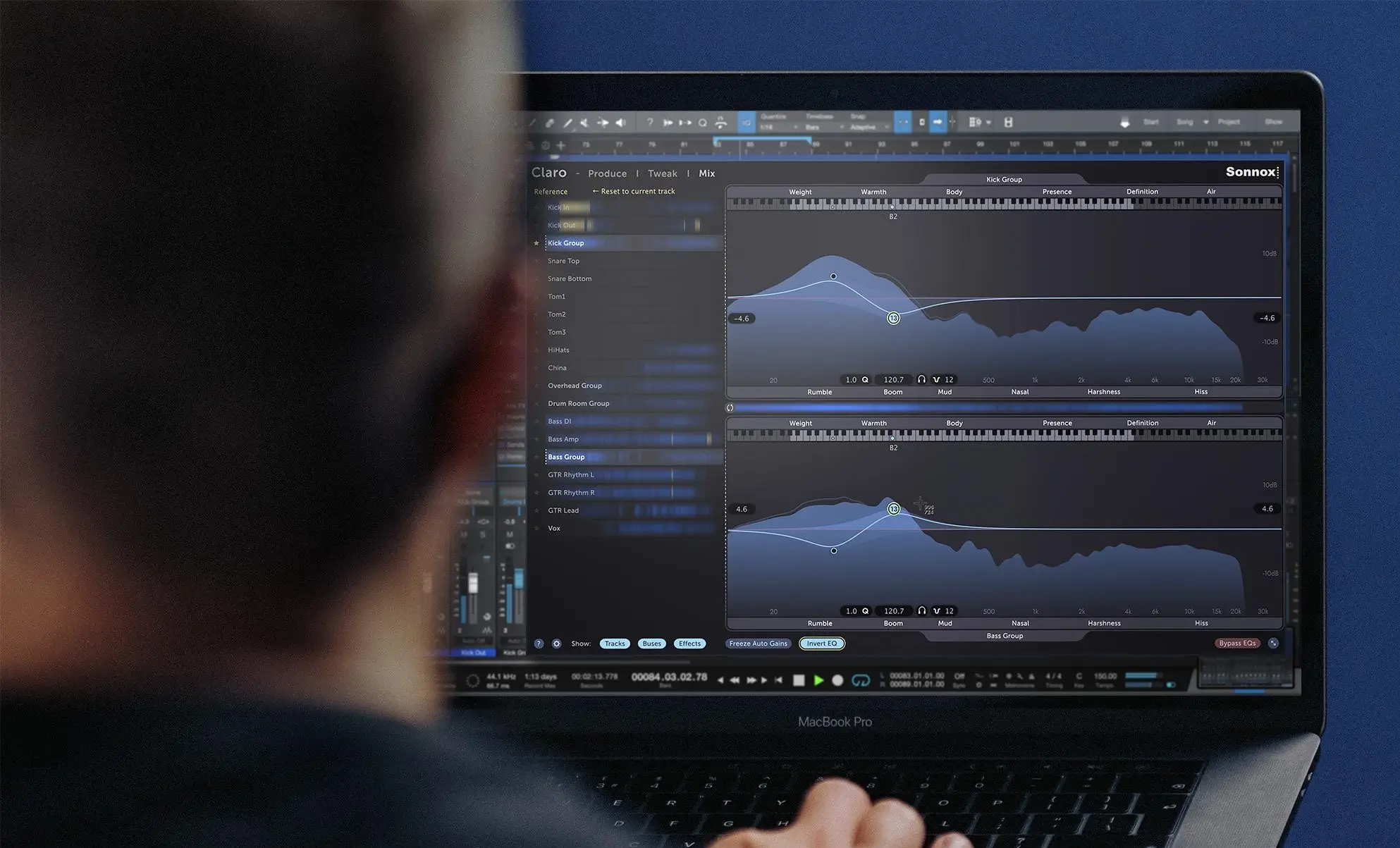
We started with a high-level idea: a tone-shaping EQ with a bird’s-eye view of how tracks interact, where focused and detailed views are just different ways of seeing the same underlying work.
That meant:
- Simple views that could open into detailed ones, without hiding what had already been done
- Multi-track spectral metering and EQ control in one place
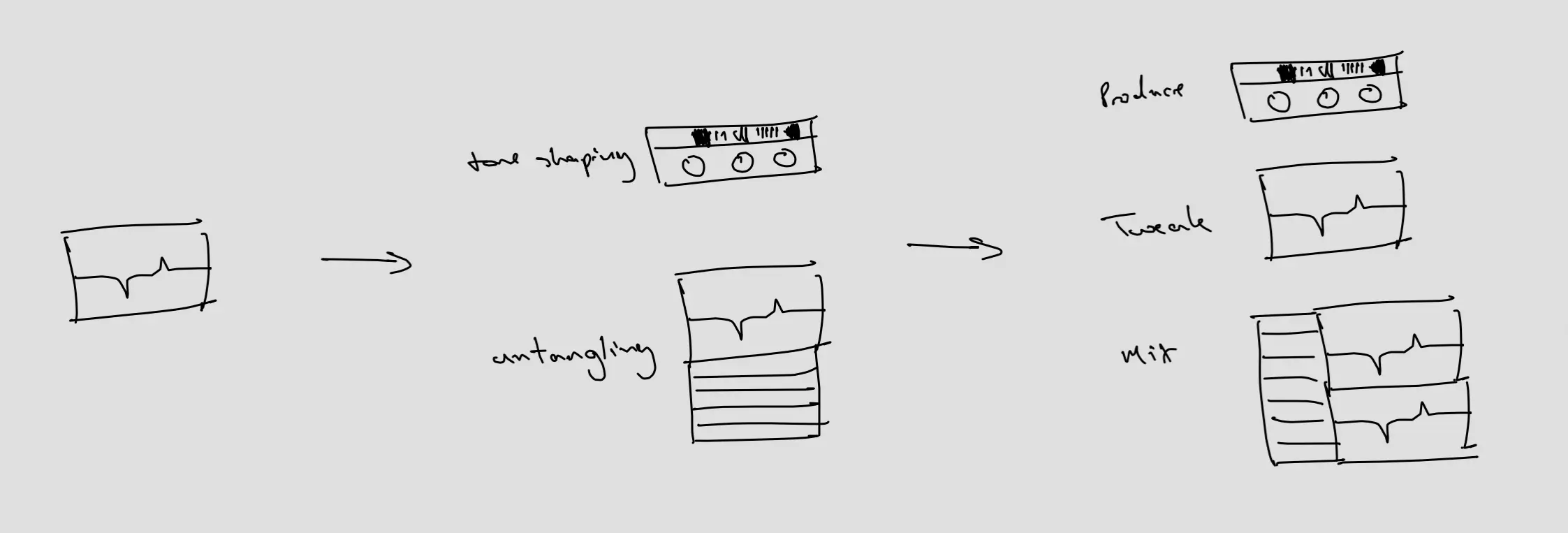
Rather than trying to design everything up front, we built rough versions of this idea and put them in the hands of some music producers for a few weeks at a time. After each iteration, we spoke with them about how it actually fit into their projects, then rebuilt the prototype to answer the next set of questions.
Once the shape of the product felt right, we finalised the signal processing, the interface design, and the full implementation.
Challenges
How simple could we make it without losing usefulness?
For the progressive-disclosure idea to work, the simplest “Produce” view needed to:
- Be good enough to use all the time, so it was already there when more detail was needed
- But not so powerful that it pulled people into over-tweaking too early
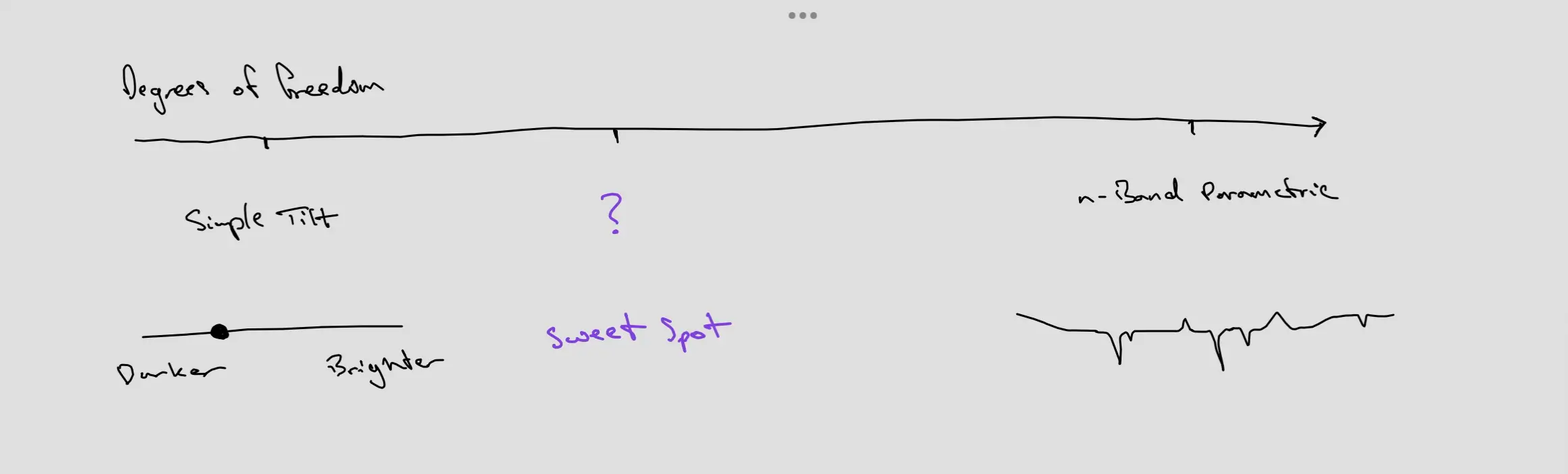
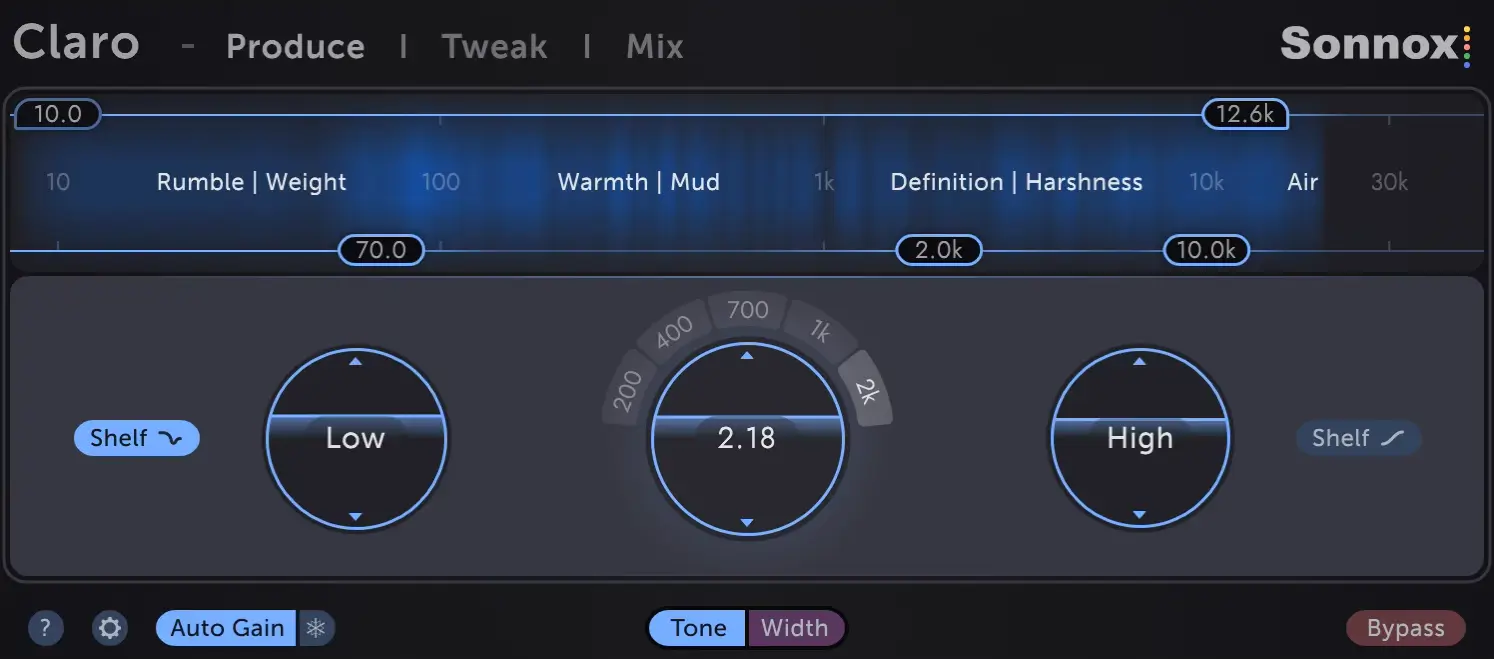
We explored everything from single-band tilts to full parametric EQs before landing on a three-band layout with filters and heat-map spectral metering.
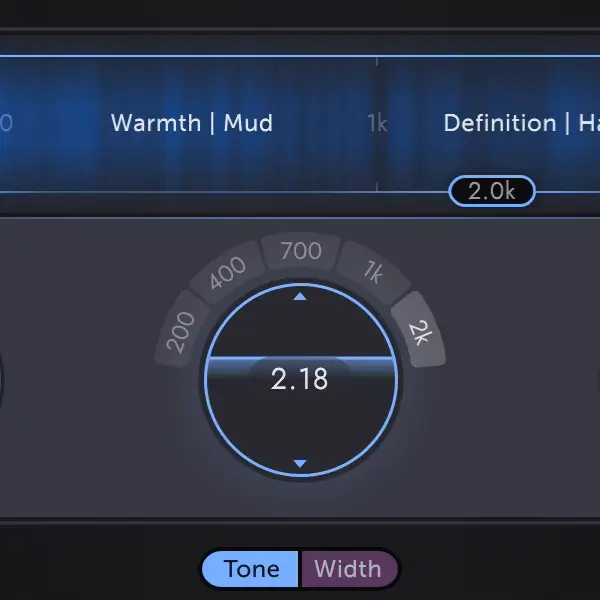
We also replaced numbers with descriptive labels that hinted at tonal character, which less experienced producers found far more intuitive. But that created friction for experienced users who relied on Hz and dB.
We solved this by showing precise frequency targets only when they were useful: a radial preset menu appears on hover, giving experts fast access to familiar anchors without cluttering the interface for everyone else.
Most mixers use a “boost and sweep” technique to find resonances to cut. It’s fast, but everything sounds bad when you do it, and it takes experience to know what actually matters.
Rather than invent a new workflow, we made this one safer.
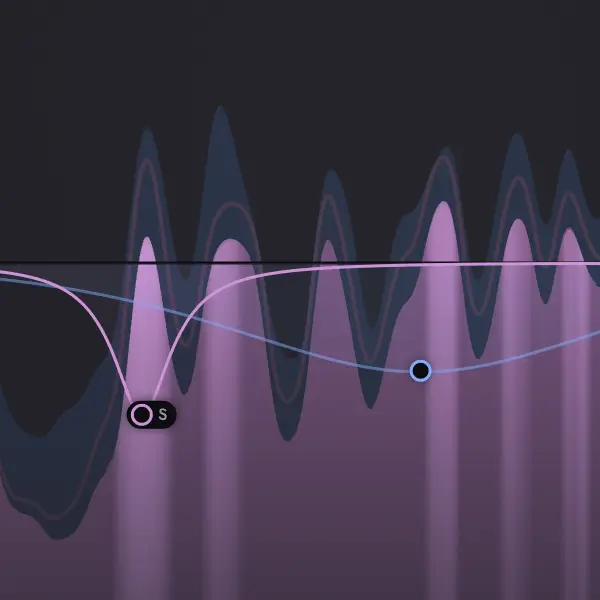
When users narrow an EQ band, Claro automatically highlights resonances using similar signal processing that powers its masking analysis. This shows what experienced engineers listen for, without requiring the experience.
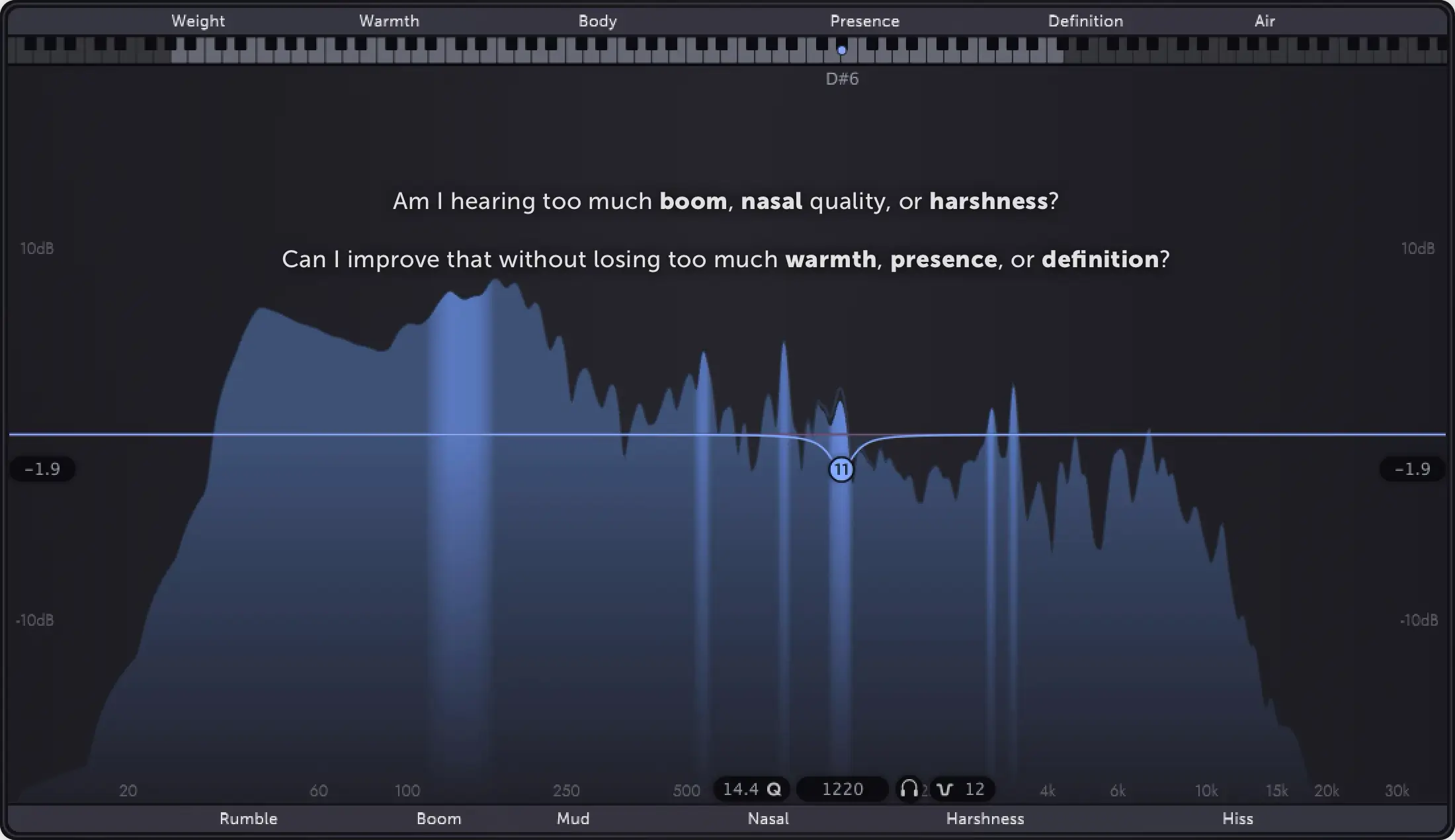
We took this further by making the metering adapt to what the user was doing:
- Wide moves show overall tonal balance
- Narrow moves reveal precise resonances
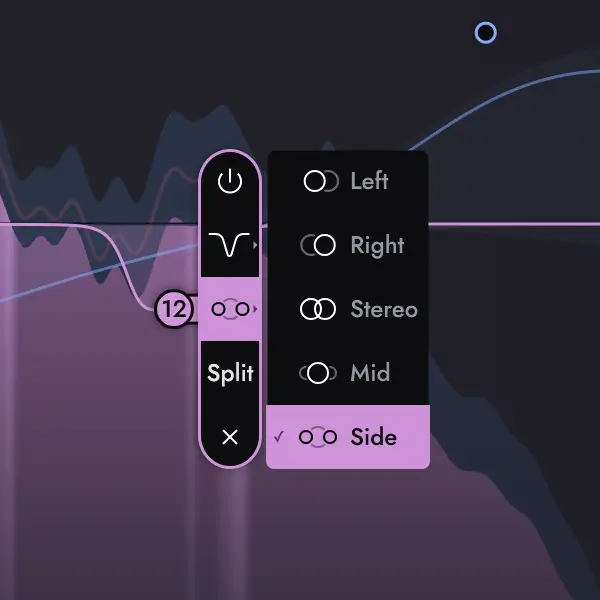
- The spectrum switches to match the band and channel being adjusted
This means the display always reflects the question the user is implicitly asking in that moment.
Listening past feature requests
Some testers asked for full detailed controls to be visible in the simplest view.
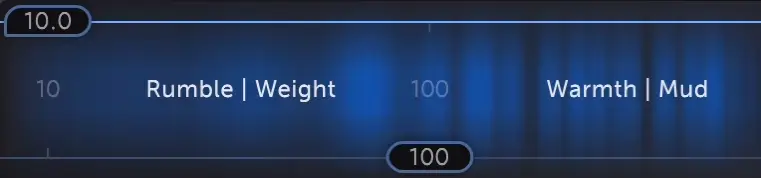
Rather than adding complexity, we dug into why they were asking. The real issue was that they didn’t trust the low-frequency response of their listening environments or the heatmap meter.
By improving low-frequency resolution in the metering, they gained the confidence they were missing and stopped asking for more controls.
Impact
Claro became the fastest-selling Sonnox product to date and has continued to perform strongly since its launch. It expanded the company’s audience and established a new product direction, making professional signal processing more accessible without compromising the brand’s core identity.
 Tim Lloyd